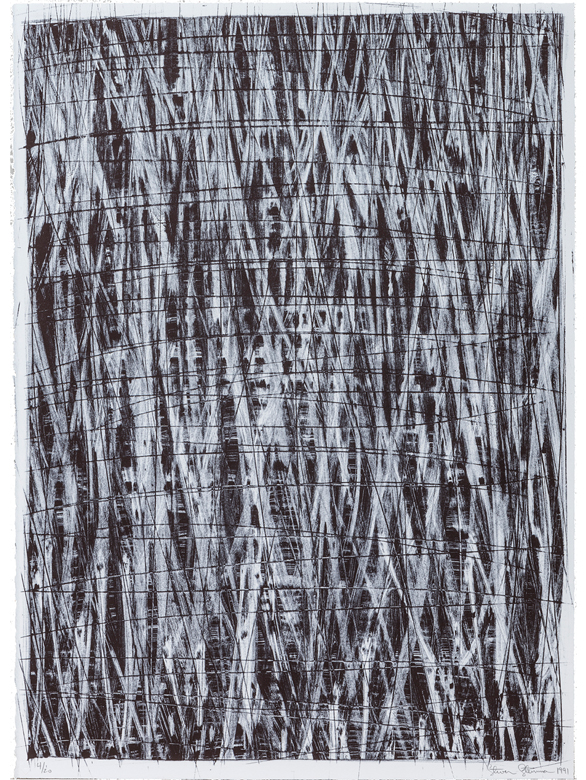
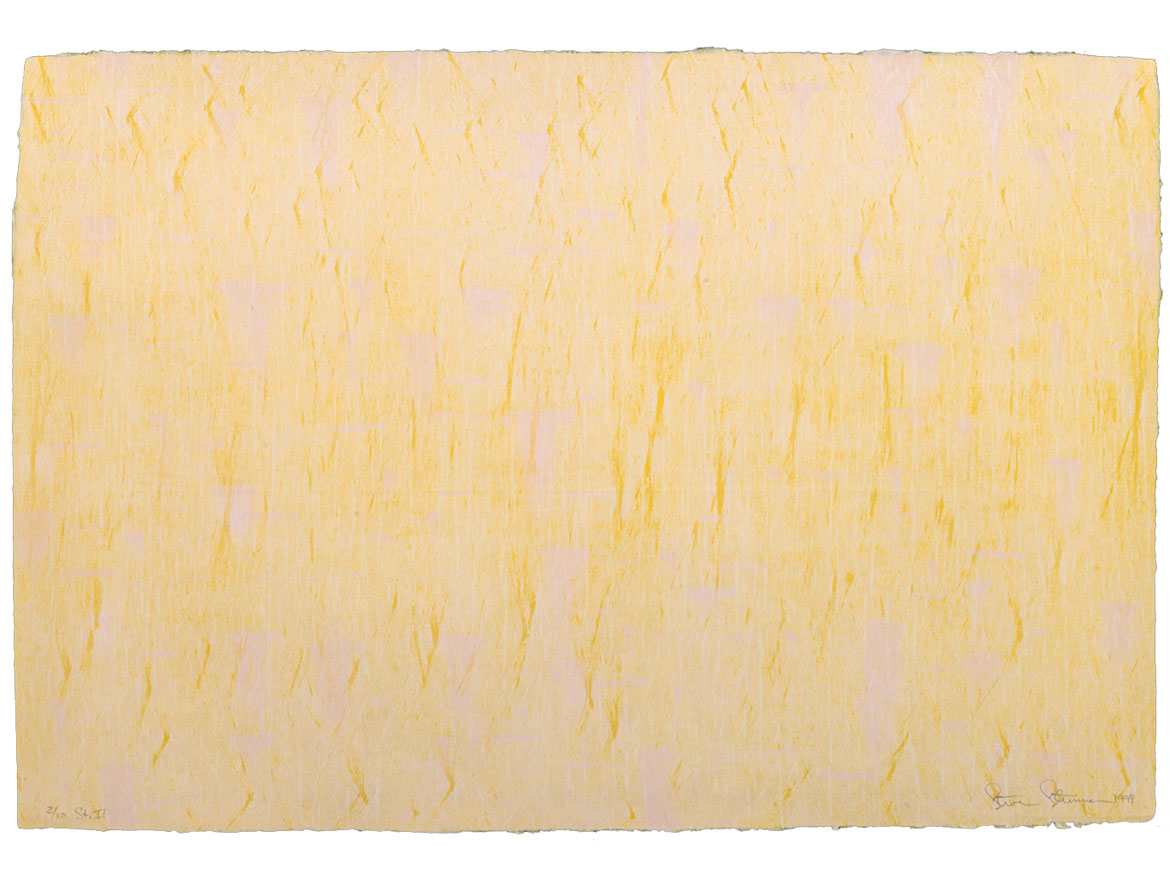
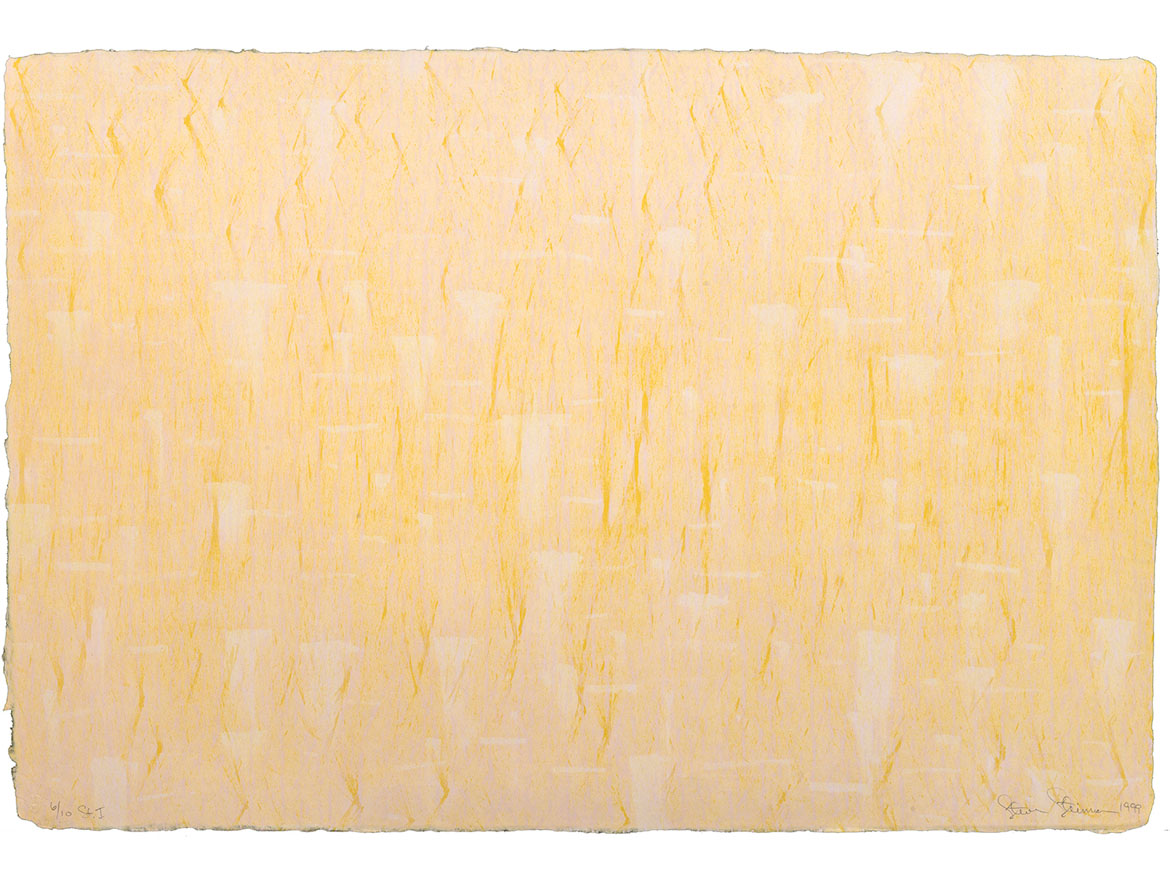
Steven Steinman, Sparks / Showers, Von Lintel Gallery, Los Angeles

INVISIBLE TERRAIN : Yizhak Elyashiv, Ruth Shouval, and Steven Steinman

https://barbaradavisgallery.com/

Morning Glory, 2026

Oil on linen

36 x 45 inches

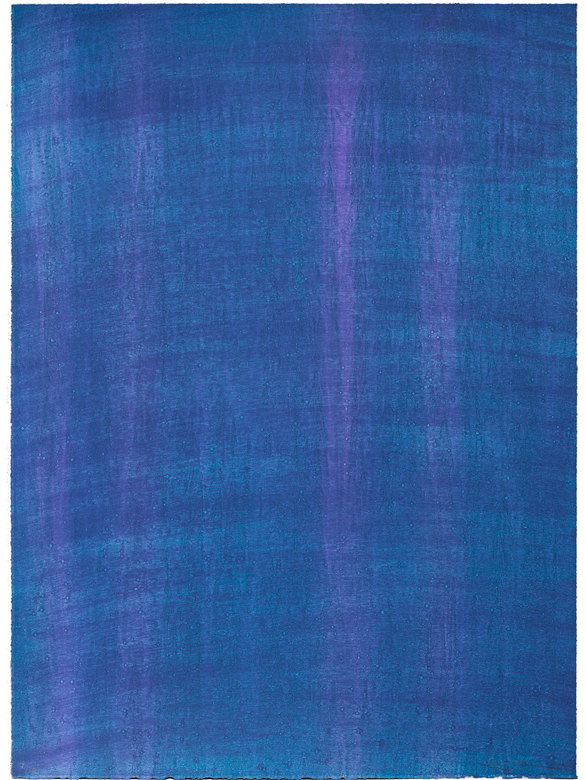
Steven Steinman works where sensation gathers before it becomes thought. His paintings resonate within the lineage of Abstract Expressionism and Color Field painting, where gesture and atmosphere replace depiction, and the surface becomes an arena for internal time. Color arrives, breaks apart, and returns in altered form. The work also echoes later process-based practices, in which accident and structure coexist as equal forces. The surface becomes a field of listening, where gesture follows something just ahead of it, always arriving slightly late. Accidents open doors rather than interrupt them. From this continual unfolding, the work takes shape not as image, but as atmosphere—something felt before it is understood.


Barbara Davis Gallery is pleased to present INVISIBLE TERRAIN, an exhibition featuring the work of Yizhak Elyashiv, Ruth Shouval, and Steven SteinmanThe exhibition opens Friday, June 26, 2026, from 6:30–8:30 PM.


There are places that do not announce themselves. They arrive softly—like remembered weather, like a name just out of reach. They are made not of ground alone, but of what gathers beneath it: memory, drift, residue, and the quiet weight of time passing through things. INVISIBLE TERRAIN traces these unseen places, where three artists move without map or compass, guided instead by what flickers at the edge of recognition.


Here, a line is never only a line. A field is never only a field. Each gesture becomes a listening device; each surface, a place where something once living continues to breathe. In conversation with postwar abstraction, process-based practices, and expanded drawing traditions, these works extend a language shaped as much by absence as by form. The exhibition unfolds as if the world were still forming—softly, unevenly, without conclusion.

For Yizhak Elyashiv, the earth is a memory that has not yet finished speaking. His practice echoes the lineage of cartographic drawing and conceptual landscape, where artists from Land Art traditions to contemporary diagrammatic practices have treated terrain not as image, but as a record of shifting perception. Between geographies, he moves through spaces that hold both arrival and departure at once. Fields carry the echo of those who worked them, left them, returned only in thought. In his drawings and mappings, observation becomes a kind of touching-at-a-distance—an extension of the conceptual impulse to make seeing itself unstable. What remains is not a view, but a presence: faint, persistent, almost like breath held in soil.


Ruth Shouval begins with what appears certain—circles, squares, edges, enclosures—and allows them to loosen, as if form itself were remembering how to dissolve. Her work enters into dialogue with the history of geometric abstraction and minimalism, where artists such as Sol LeWitt and Agnes Martin transformed structure into a site of contemplation rather than control. Yet here, geometry is not resolved but unmade. Stability drifts. Order softens. What once held becomes something briefly held, then released. In this quiet undoing, her work aligns with post-minimal strategies of repetition, erosion, and perceptual doubt. Memory does not stay still long enough to be fixed; it lingers instead as interval, hesitation, return.


Together, these works form a terrain that cannot be seen all at once, only entered. It reveals itself in fragments: a pressure here, a drift there, a rhythm that seems to belong to no single origin. The exhibition moves like a slow passage through what cannot be held—only sensed, crossed, and briefly known.


INVISIBLE TERRAIN is a quiet geography of what slips past naming. A place where seeing becomes a form of wandering, and wandering becomes a form of remembering.


About Barbara Davis Gallery


For 43 years, Barbara Davis Gallery has brought groundbreaking contemporary art to Houston.  Driven by her intuitive sensibilities and perennially fresh vision, Barbara Davis has championed a generation of significant contemporary artists.  In the process she has challenged a generation of art collectors, both seasoned and aspiring, to see the beauty and value in their work through dialogs and panel discussions with prominent museum curators and artists from across genres.   She has launched the careers of international artists such as Julie Mehretu, one of the most important contemporary artists of our time, and Andrea Bianconi, who has become an international figure in the contemporary art scene, having given Mehretu her first gallery exhibition and Bianconi his first U.S. exhibition. She was also one of the first to bring to Houston the influential names of Joseph Beuys, Kiki Smith, Louis Bourgeois, Jonathan Borofsky, Günther Förg, Allan McCollum, Gilbert & George, Chuck Close, Robert Longo, Sally Mann, Jenny Holzer, Sam Gilliam, Jessica Stockholder, John Baldessari and Elizabeth Peyton among many others.  She brought progressive international exhibitions such as Leipzig Select, artists from the New Leipzig School, and exhibitions for Beijing East Village artists Zhang Huan and Li Wei.  Barbara Davis Gallery was one of the first Texas galleries to be included in the influential and prestigious Art Basel Miami Beach art fair.   The gallery’s exhibitions have been reviewed in international publications such as ArtForum, Art in America, Art News, Flash Art International, The Art Economist, and The New York Times among many others.  Her passion for exhibiting innovative contemporary art and her commitment to educating her collectors and the community has driven the focus of the gallery for 43 years. 


Barbara Davis Gallery | 4411 Montrose Blvd | Houston, TX 77006 US

Hamilton Press, Venice, California

Collaborating with Ed Hamilton on lithographs has been such a great experience. When I was first asked by Ed Ruscha to do prints with Ed Hamilton, I thought we would work on etchings. I went to meet Ed Hamilton and said, "Ed, I am really excited about doing etchings with you!". He said, "we do lithography here". I said, "I am really excited to work on some lithographs with you!". :-) I do love etching, but Ed made it possible for me to experiment and try to get some etching into some of the many lithographs we did together, by scratching into the plates I had drawn into. I do love lithography now as well. What a great printmaker he is!

Steinman_bw.jpg

Apparitions: Frottages and Rubbings from 1860 to Now, Hammer Museum, Los Angeles, CA / Menil Collection Houston, TX

Apparitions: Frottages and Rubbings from 1860 to Now, Hammer Museum, Los Angeles, CA / Menil Collection Houston, TX

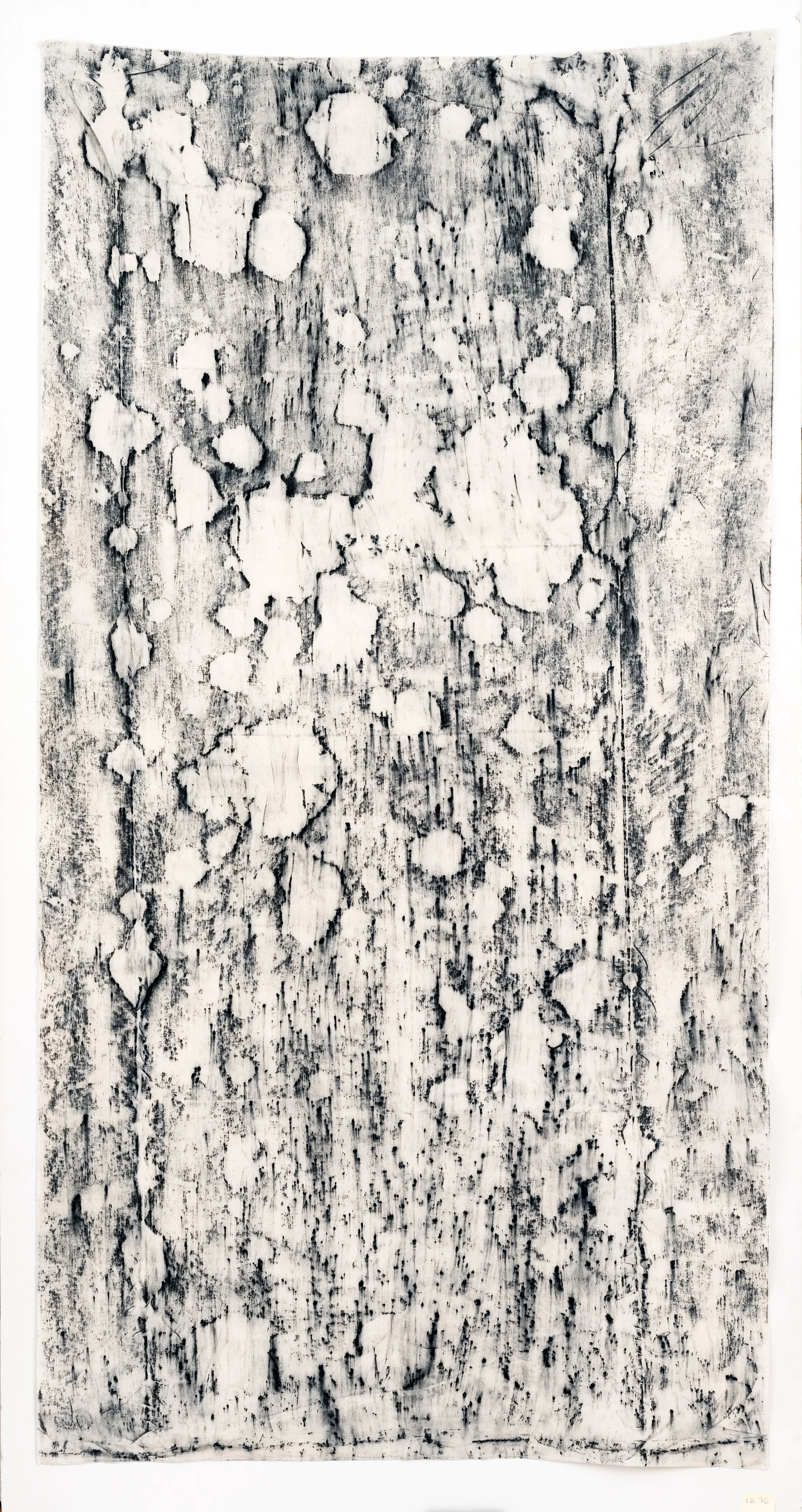
Berlin is full of history and historical traces. The first time I came to Berlin I was astounded and shocked about all the bullet-holes you still could see on many buildings and façades. They made the memory of the war past and present at the same time. Now that Berlin has gone and is still going through a phase of renovation and reconstruction, these holes are slowly but surely disappearing. With “Shroud of Berlin” I want to do an imprint of that impression and the time/memory caught in it.

Read More

Julian Pretto Gallery, MINUS SPACE, Brooklyn, NY

Julian Pretto Gallery, MINUS SPACE, Brooklyn, NY

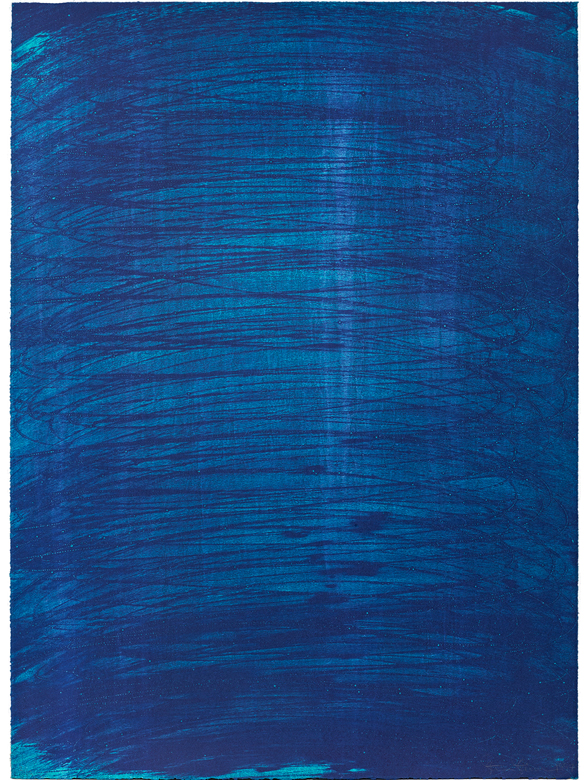
Blue, 1990, oil on canvas, 20 x 16 inches / 50.8 x 40.6 cm

September 6 – October 26, 2013

Participating Artists
Rene Pierre Allain, Roberta Allen, Taka Amano, Carl Andre, Stephen Antonakos, Robert Barry, Tom Brazelton, Farrell Brickhouse, Rosemarie Castoro, Peter Downsbrough, Kathy Drasher, Gail Fitzgerald, Suzan Frecon, Cris Gianakos, Christian Haub, Nancy Haynes, Marcia Hafif, Betsy Kaufman, Melissa Kretschmer, Gary Lang, Ellen Lanyon, Christopher Lea, Julian Lethbridge, Daniel Levine, Sol Lewitt, Tom Martinelli, Gregory Montreuil, Olivier Mosset, Mary Obering, Antonella Piemontese, Donald Powley, Lucio Pozzi, Daniel Reynolds, Stephen Rosenthal, DM Simons, Phil Sims, Cary Smith, Steven Steinman, Li Trincere, Ted Victoria, Merrill Wagner, Oliver Wasow, Stephen Westfall, Robert Yasuda, John Zinsser & others

MINUS SPACE is delighted to present the survey exhibition Julian Pretto Gallery. Organized in collaboration with artist John Zinsser, this is the first exhibition to examine the history and legacy of gallerist Julian Pretto (1945-1995) and his fabled downtown New York galleries, active during the mid-1970s through the mid-1990s.

Renowned for his sophisticated eye, keen ability to recognize new talent, and uncommon generosity, Pretto was beloved by the artists he exhibited and widely-respected in the greater contemporary art world. During his 30-year career, Pretto presented the work of well over 100 artists spanning multiple generations, strategies, and styles at an array of small, often temporary alternative gallery spaces in Manhattan’s Tribeca, Soho, and West Village neighborhoods. With a penchant for reductive abstraction, he worked both with established artists closely associated with the Minimalism, Post-Minimalism, and Conceptual Art movements, as well as emerging artists investigating new forms of hard-edge, monochrome, pattern, and gestural abstraction.

Julian Pretto Gallery will highlight a single work by more than 40 national and international artists. On view will be work in an array of different media, including painting, drawing, sculpture, installation, video, and poetry. All works included in the exhibition were either exhibited at Pretto’s gallery, produced at approximately the same time of those exhibitions, or acquired directly from Pretto. By no means an exhaustive survey, each of the artists included in this exhibition participated in multiple solo and group exhibitions with Pretto over the years. Many are also represented in the Julian Pretto Collection at the Wadsworth Atheneum Museum of Art in Hartford, CT.

Julian Pretto (1945-1995)
Leonard Julian Pretto was born in Chicago in 1945 and raised in Ogelsby, IL. His father owned a company that produced television cabinets. Pretto studied at the University of Illinois where he met long-time friend and collaborator, Chicago gallerist Roger Ramsay. In 1968, Pretto began to work as an assistant at Richard Gray Gallery in Chicago. After a brief marriage that ended in divorce, Pretto moved to New York later that year where he worked for Richard L. Feigen Gallery. In 1972, Pretto changed his name from Leonard to Julian Pretto.

With a genuine instinct for the nexus of underutilized real estate and innovative visual art, Pretto began to locate empty storefronts and other available spaces throughout lower Manhattan, in particular in the Soho and Tribeca neighborhoods. Through a personal contact at the NYC Department of Buildings, Pretto began to contact property owners offering to help develop and raise the profile of their properties by organizing temporary exhibitions in them. Pretto continued this strategy over the next two decades and pioneered the concept of pop-up galleries. In 1974, Pretto organized his first documented exhibition at 247 W. 30th Street, 15th Floor. He began to work for Sperone Westwater Fischer in 1975 as the first director of its new NYC gallery.

In spring 1976, Pretto began to organize what would later be known as the Fine Arts Building at 105 Hudson Street in Tribeca. Pretto converted the former empty 10-story office building into one of the key cultural hubs in this new, emerging arts neighborhood. The building housed dozens of artist studios, as well as several new galleries, exhibition spaces and non-profits. This included the groundbreaking organizations New Museum of Contemporary Art, Printed Matter, and Artists Space, among others. Pretto opened his first eponymous gallery on one of the lower floors of the building before later converting the adjacent building at 176 Franklin Street, a former speakeasy, into a 3-story gallery. Exhibition highlights during this period included a three-venue career survey of Rosemarie Castoro, the first exhibition of Allan McCollum’s Surrogate Paintings, and an large-scale exhibition of Lucio Pozzi mounted in collaboration with Hal Bromm Gallery and John Weber Gallery.

From the inception of his program, Pretto invited emerging curators and future dealers to organize exhibitions at his gallery. Jeffrey Deitch curated his first exhibition Lives at the gallery in December 1975, which presented artists who used life as their art medium and included Vito Acconci, Laurie Anderson, Joseph Beuys, Jonathan Borofsky, Scott Burton, Dennis Oppenheim, Andy Warhol, William Wegman, and Hannah Wilke. Other curatorial projects at the gallery included Painting organized by Annina Nosei (1975), New Sculpture Plans and Projects organized by Rosalind Krauss (1976), and Aspects of Minimal Art organized by Per Jensen and Naomi Spector (1978), among others.

In the early 1980s, Pretto moved to Costa Rica where he was involved in the local contemporary art scene. He purchased a modest house situated underneath a volcano in the town of Fortuna and began to organize exhibitions of local and international artists both there and in the capital San Jose. In 1985, Pretto curated the group exhibition Contemporary Costa Rica at The Clocktower in NYC.

In 1987, Pretto moved back to NYC permanently. From 1987-1993, he opened a series of primarily smaller gallery spaces on the western edge of Soho, including at 103 Sullivan Street, 50 and 54 MacDougal, 251 6th Avenue, 69 Wooster, and 142 Greene Street. During this period of time, Pretto operated at least three different gallery spaces simultaneously. Living quite modestly in the back office of one of his galleries, Pretto organized countless solo and group exhibitions, which were often produced in rapid-fire succession, sometimes lasting no more than two weeks in length. Pretto also formed a brief partnership during this time with Susan Berland and Patricia Hall to create Julian Pretto / Berland Hall Gallery. According to the artists he exhibited, Pretto was the first person they knew to own a cell phone, which he used to communicate between his various locations.

During the late 1980s and early 1990s Pretto mounted the first solo exhibitions of then emerging artists Rene Pierre Allain, Julian Lethbridge, Daniel Levine, Cary Smith, Li Trincere, and John Zinsser, among many others.

Swept up by the AIDS epidemic and with his health failing, Pretto closed the last of his galleries in 1993, but continued to curate a pair of group exhibitions the following year at Littlejohn/Sternau Gallery and Littlejohn Contemporary, NYC. After a brief period living at The Hotel Chelsea, Pretto succumbed to AIDS-related complications on May 22, 1995, at St. Vincent’s Hospital, NYC. He was 50 years old. His obituary appeared in The New York Times on May 24 and in the Chicago Tribune on June 4.

Just prior to his death, Pretto, an individual with few personal possessions, arranged to donate his art collection, consisting of more than 40 works, to the Wadsworth Atheneum Museum of Art in Hartford, CT. In January 1996, the Wadsworth Atheneum mounted the exhibition Acquiring Art in the 90s: The Julian Pretto Collection, which was curated by Andrea Miller-Keller and James Rondeau.

Read More

Drawing is another kind of language: Recent Drawings from a New York Private Collection 1999 - 2001

Drawing is another kind of language: Recent Drawings from a New York Private Collection 1999 - 2001

Untitled, 1994, graphite on paper with scored lines, 26 ¼ x 40 inches (66.7 x 101.6 cm)

In this 1994 work by Steven Steinman, a lush gray field is complicated by the addition of rhythmic skeins of lines. The composition at first seems relatively simple in both form and and means: a gestural use of graphite animates the surface of a paper ground colored gray. Yet it is the extent to which Steinman expertly varies the force of his lines, and the juxtaposition of pencil and powdered graphite, that give the work a surprising formal range.

The powdered pigment seems to have been dabbed on in wide, circular strokes. As a result, glimpses of ground punctuate the composition at semi regular intervals. The impression is one of translucent gray veils swaying and parting in the background.

The relative density of the gray ground contrasts with the calligraphy that seems to have been rapidly drawn, a tension that contributes to a greater sense of movement at the surface of the work. A generalized pattern emerges from a combination of long vertical strokes, sometimes forming V's and wide arcs. The looming filaments in particular echo the subtle rhythms suggested by the colored field on which they are laid. A sense of both depth and movement invites the viewer into a virtual space.

Pamela Lee

Read More